This isn't just a course

Contact Us
arrow-down

At Deep Med, courses or coaching start at a week — and many people come back to stay longer.

We start dry — breathing, equalisation, understanding what your body is doing and why. Then we get in the water, whilst Fabrice and the team observe you on every dive. They watch how you move, how you breathe, where you tighten up, where you lose it.

Alexey Molchanov, a world record holder and son of the sport’s greatest ever freediver, puts it simply:

“Without joy it doesn’t work.”

 Which is why we don’t build courses around certifications, but rather around you.

Your time with Deep Med is structured, yes. But the aim isn’t to churn out certifications. It’s where freediving becomes something you feel genuinely comfortable with — in the pool, on the line, in open water.  The certification arrives as a natural consequence of that comfort. Not the other way around.
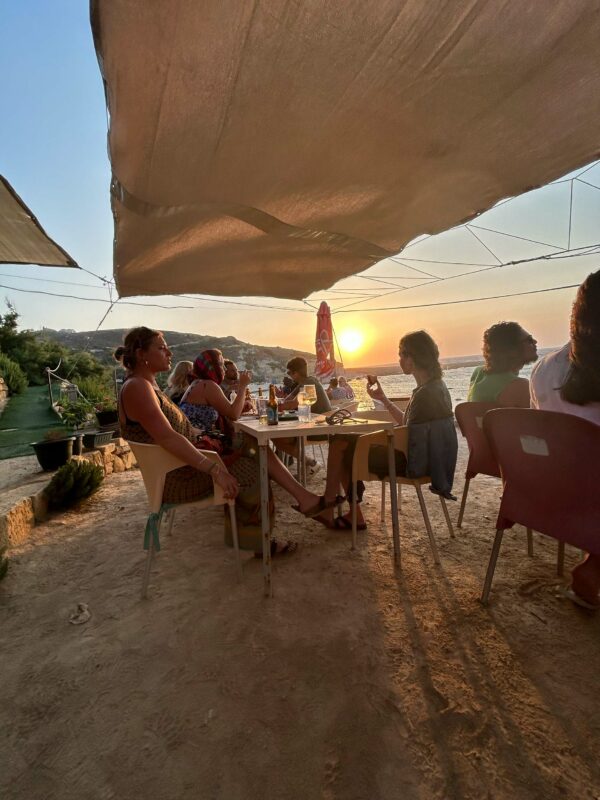
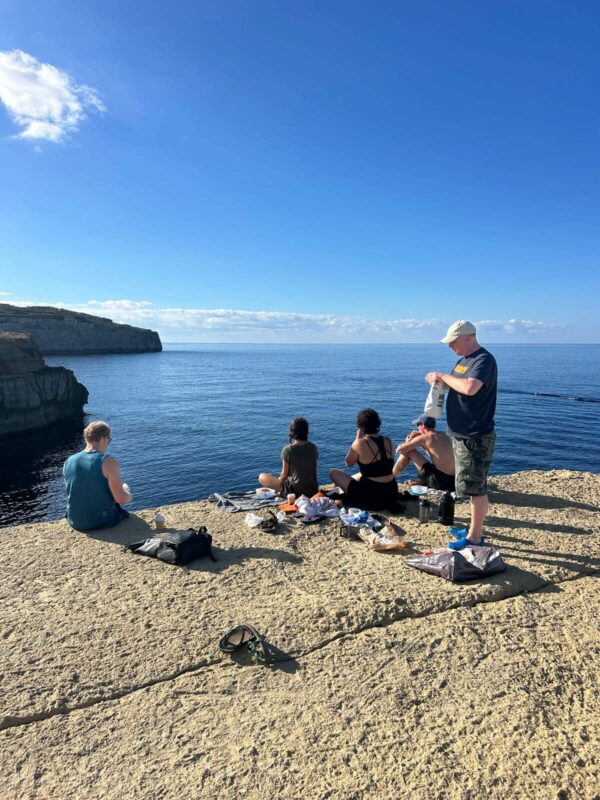
Freedivers sitting by a beach, eating pizza

How the Week Works

Courses run on a fixed weekly cycle. Beginners start every Monday, whilst more experienced divers can join across the week on their own dedicated buoys with their own instructor. Different levels, same water, same vibe.

Sunday Check in, settle in, get your bearings. Gozo is worth arriving to slowly.

Monday Every beginner course starts on land. We begin at 08:00 with breathing. breath-holding and equalisation work. We then proceed to the open water. Advanced divers can join the morning session or opt out depending on what they need.

Monday and Tuesday are both shore dives, which means you get to experience Gozo’s coastline up close from day one. The rock formations, the clarity of the water and all the possible dive sites, depending on the weather conditions for the day.

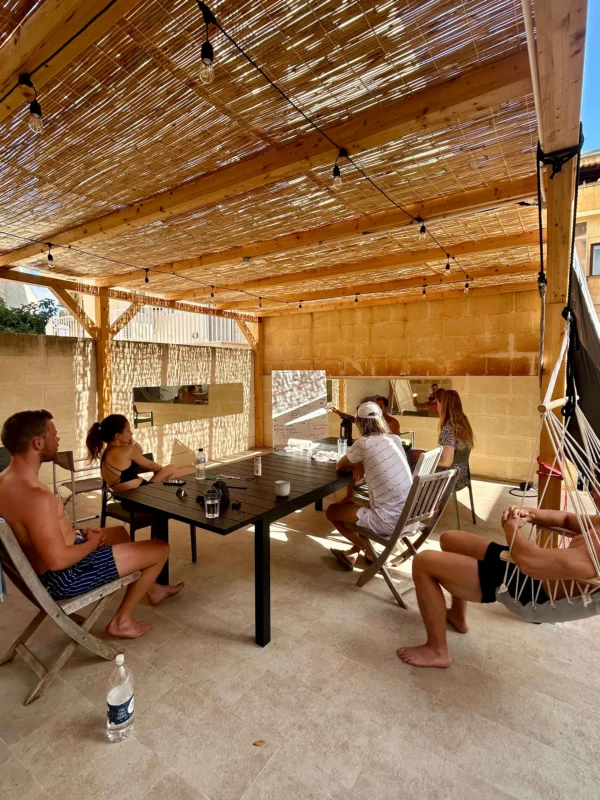
Tuesday 08:00 start. Stretching and breathwork, then shore diving in the morning. Tuesday afternoons open up into workshops, activities, or on the right week, an early pizza night under the pergola.

Wednesday A real rest day. Freediving is physically and mentally taxing — on the divers and on the instructors. A long season without proper recovery produces burned-out teaching and worse diving. We take rest seriously.

Natalia Molchanova — the architect of the Molchanovs system and the most decorated freediver in history — coached her students to “orient on the present condition of the organism” rather than chase targets. Rest days are when the organism catches up. They’re part of the training.

Wednesday is also a good day to explore Gozo. We’ll point you in the right direction.

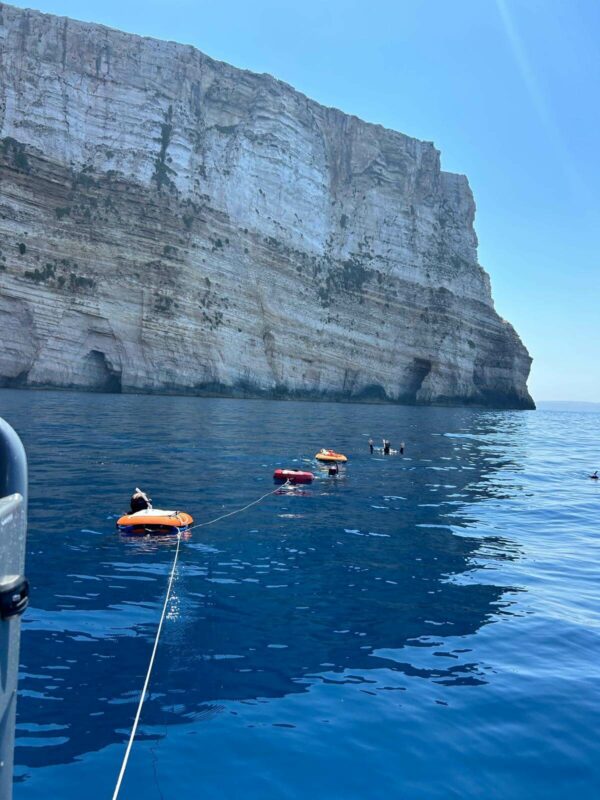
Thursday & Friday The week’s highlight for most people. We leave the centre at 08:00 on the RIB (our private boat) — line diving in the morning followed by adventure. Caves, arches, wrecks, open water. Sites chosen based on conditions and what each diver is working on. These are the days where everything from the earlier sessions starts to come together in deeper, more varied water.

Friday sometimes ends with a sunset pizza night at the centre. It started as a practical idea. It’s become one of those things people mention when they get home.

Saturday Stretch at 08:00, line diving to close the week. A strong finish before Sunday’s rest day.

How the Week Works

What We're Actually Working On

Depth or comfort in the water is a byproduct. What we’re really training is this:

  • Relaxation. Umberto Pelizzari — one of the greatest freedivers who ever lived — put it plainly: “Especially at the beginning, freediving is relaxation.” Every moment of tension burns oxygen. Every moment of calm extends your dive. We spend more time on this than anything else, and most students are surprised to discover how unrelaxed they actually are until someone points it out. Even those students who claim are ‘advanced’.
  • Equalisation. This is where most freedivers plateau, and where most schools gloss over the detail. Fabrice has spent more time studying and teaching equalisation than anything else. If you’ve come from a previous course with unresolved EQ problems — and a significant number of our students have — this is probably the main reason you’re here.
  • Repetition. Skills don’t stick from being told once. They stick from being repeated until they’re automatic — until your body does it without your brain having to think about it. This is why our courses are longer than most. Even by the end of the week, things only begin to click and it’s for this reason our diver return. For even longer than a week.
  • Fixing what’s broken. Many of our students arrive having already done a course elsewhere. Sometimes that course left them with bad habits, unresolved issues, or a vague sense that something wasn’t right in the water. We see this often enough that it’s become a core part of what we do — not just teaching freediving from scratch, but unlearning the things that are quietly holding people back.

What We're Actually Working On

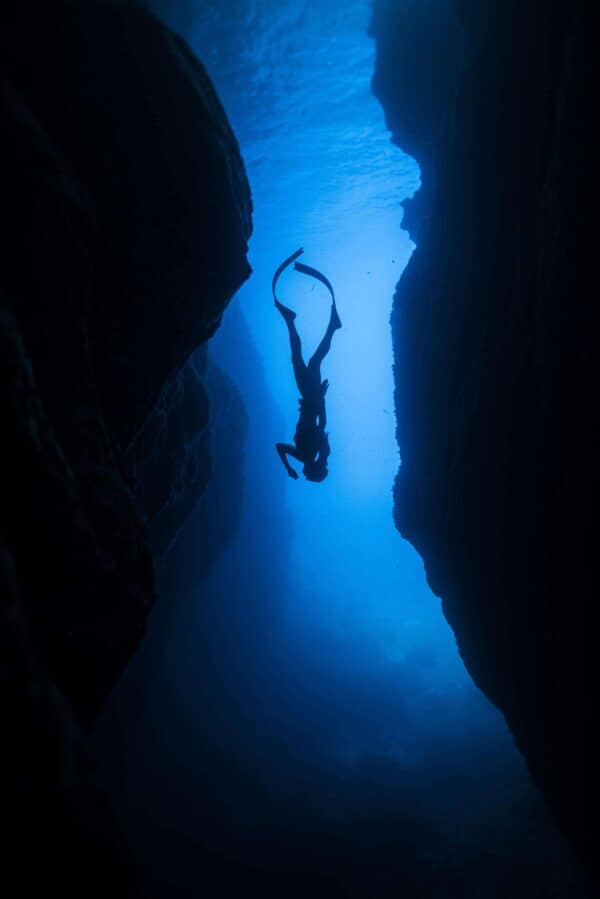
Freediver descending into a cave

The Boat, the Sites, the Adventure

Thursday and Friday are boat days. We leave at 08:00 on our private RIB and don’t come back until we’ve dived somewhere worth talking about.

Gozo’s underwater topography and dramatic cliff face is on of the reasons we’re based here. And what better way to view all this other than with a boat?  Depth close to shore, caves and arches accessible without long swims, dramatic walls that drop into blue water. On boat days,  we play — Comino’s cave systems, Malta’s wrecks, open water sites that aren’t accessible from shore. The sites change based on conditions and what we’re working on. Sometimes the best dive of the week happens somewhere we decided on that morning.

This is also where the fun diving comes in. Not every session needs to be about technique, but to bring about the joy in what we’re learning, through child-like play.

The Boat, the Sites, the Adventure

The Certification

Yes, you’ll get one, assuming you meet the requirements. But it’s worth being honest about what it means.

Natalia Molchanova didn’t just break world records. She built an education system around a single belief: that the card is evidence of a transformation that has already occurred, not a target to chase. The Molchanovs Wave system encodes this into every level — the Wave 1 breath hold requirement is deliberately accessible, designed to build confidence rather than anxiety. The skills at each level are genuine prerequisites for the next, not arbitrary checkpoints.

At Deep Med we chose Molchanovs because it aligns with how we already think about teaching. “Don’t look at marks, examine your inner state” — that was Natalia’s coaching principle. It’s ours too.

By the end of the week, the card is the least interesting thing you’ll take home. What lasts is the technique that’s become muscle memory, the safety habits that are now automatic, and the feeling — as Trubridge puts it — that the ocean is somewhere you belong rather than somewhere you’re visiting.

The Certification

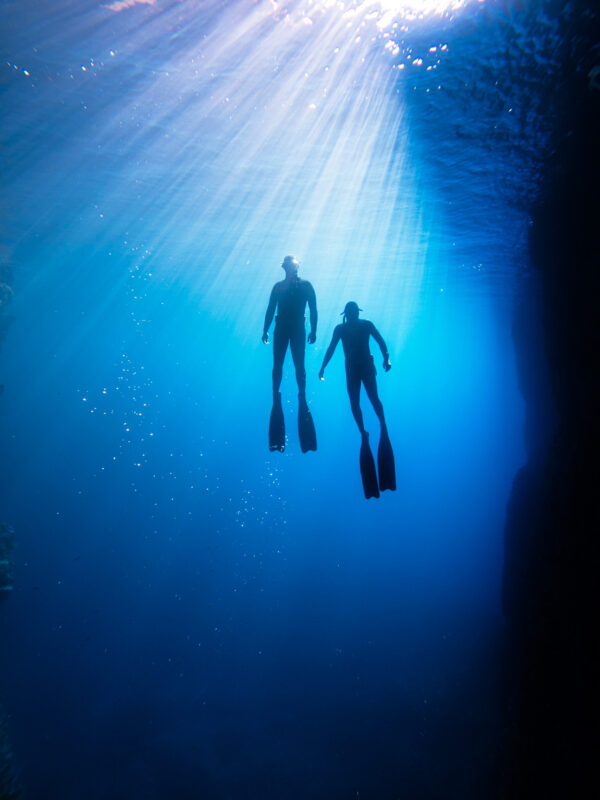
Two freedivers ascend as silhouettes, against a deep blue back drop with sun rays piercing through the water.

Get in touch and let’s talk about your next adventure

    We take your privacy seriously. We do not sell or share your data. To learn more, please see our Privacy Policy.